
Snowflake STEAM Unit
Project Summary
This integrated STEAM learning experience invites 5th-grade students to explore the science of snowflake formation, mathematical principles of symmetry and geometry, artistic expression through paper design, and poetic reflection via haiku writing. Students apply their learning through hands-on art-making, digital publishing, and peer feedback in a multi-day unit that culminates in a collaborative class gallery. I developed and illustrated the custom instructional aid for paper snowflake folding and cutting, designed to scaffold visual learners and support independent exploration.
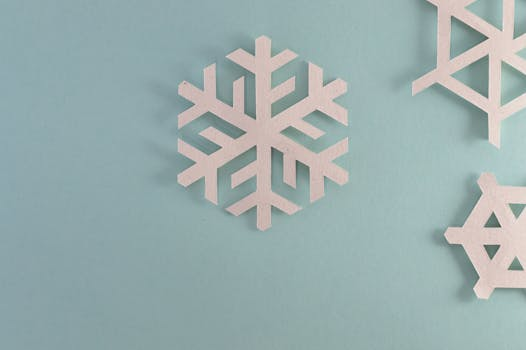
Learning Solutions
Students often experience STEAM subjects as disconnected content areas. This project addressed the need for meaningful integration that deepens conceptual understanding across disciplines, particularly in geometry, atmospheric science, and visual literacy. The instructional goal of this unit is to create a cohesive STEAM experience that supports creative expression, inquiry-based learning, and cross-disciplinary connections through a high-engagement, seasonal theme.
By the end of this unit, students will:
- Explain how snowflakes form and why each one is unique
- Construct symmetrical snowflakes using folding and cutting techniques
- Apply geometry concepts, including symmetry, angle recognition, and shape classification
- Compose an original haiku inspired by snowflake structure or seasonal imagery
- Use digital tools to publish and reflect on their work with peers
Click to enlarge the images below.
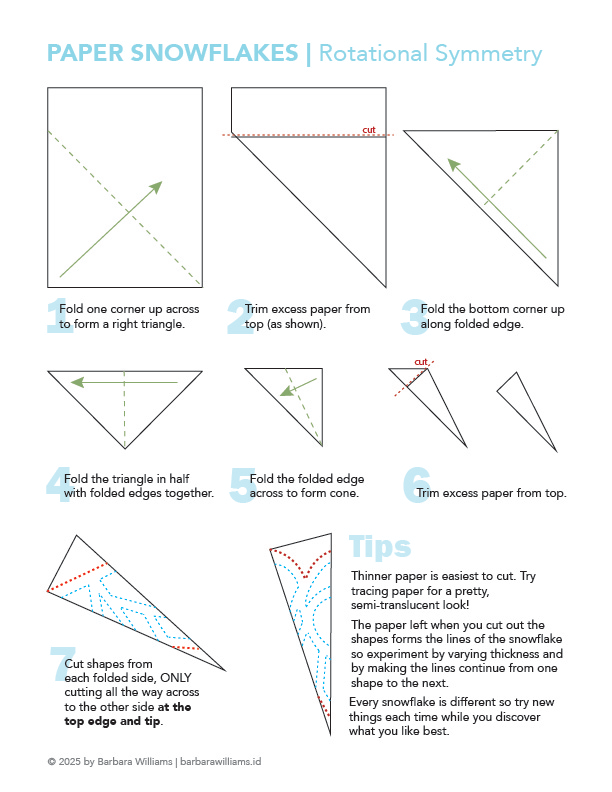
This illustrated educational aid can be used on a smart board or printed at poster size as a classroom reference or on paper for individual or home use.
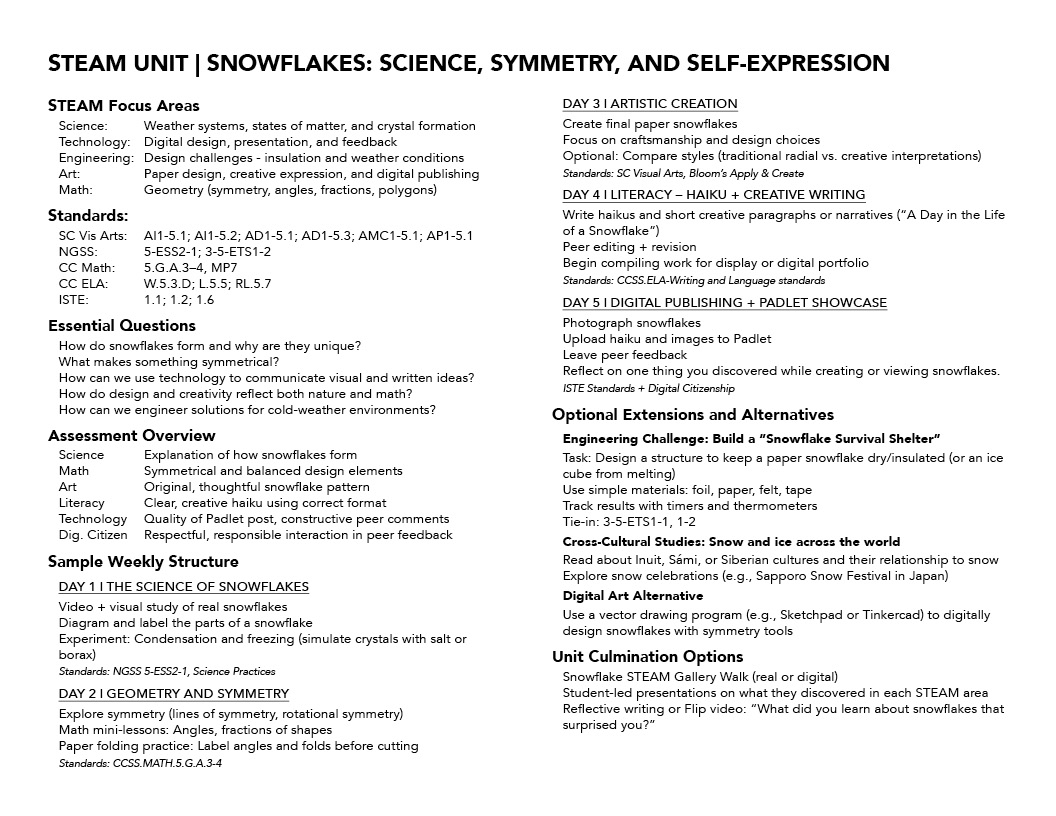
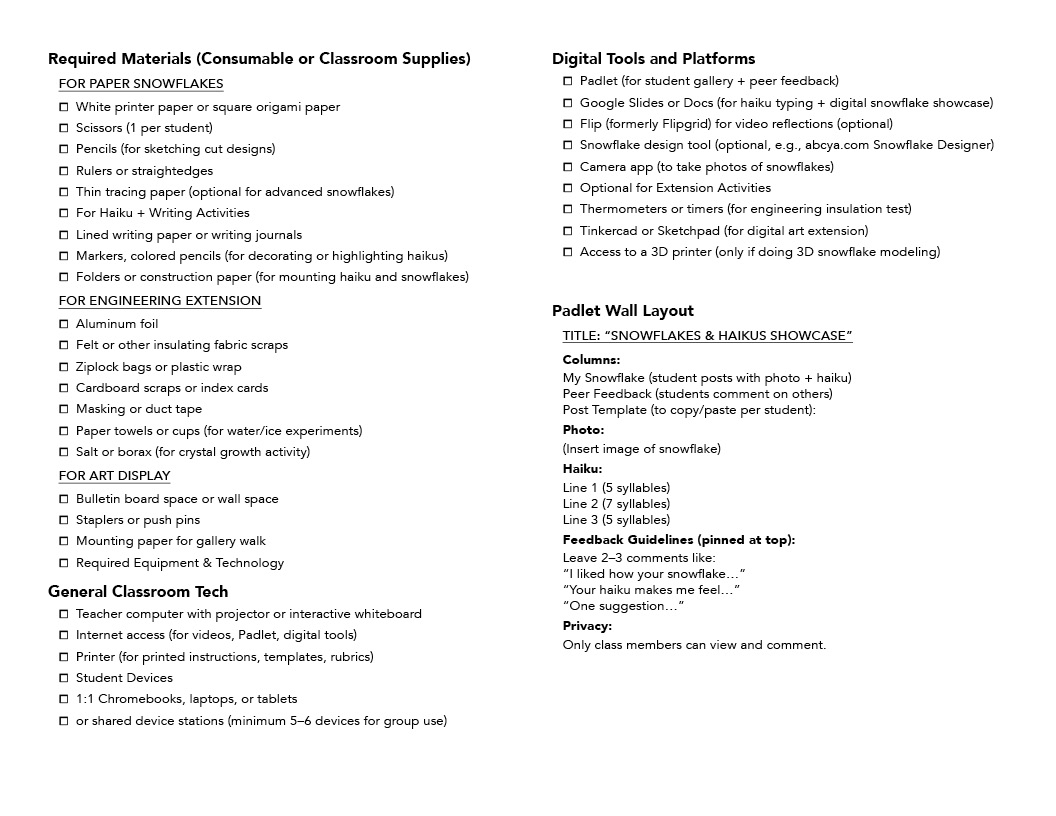
This STEAM unit is divided into five days with science, math, technology, engineering, and math components with standards alignment. A PDF can be downloaded here for screen-reader users.
Elevate Learning
The snowflake project integrates NGSS, Common Core, ISTE, and South Carolina Visual Arts Standards into a unified unit. Students explored snowflakes through observation, experimentation, artistic creation, and poetry, reinforcing retention through multiple learning modalities.
Ensure Access
The paper-based, tactile art activity accommodates a variety of learning styles and fine motor abilities, while digital options can be used to support those with diverse abilities. The step-by-step illustrated guide I created scaffolded the folding and cutting process and enabled independent success.
Support Mastery
Students practice essential academic skills—scientific observation, mathematical reasoning, poetic structure, and digital publishing—within a supportive, creative framework. Peer feedback on Padlet encourages reflection and revision, while offering opportunities for social-emotional growth.
Clarify Content
The instructional aid includes a clean, visual layout with minimal text to demonstrate the snowflake construction process. I intentionally designed the steps to emphasize geometric principles like angle folding, symmetry lines, and mirrored cutting. The final display created by students combines visual art and poetry, reinforcing cross-disciplinary understanding.